


The targeted poaching of lions has potential to become an existential threat for the species in Africa
Sam Nicholson & Peter Lindsey
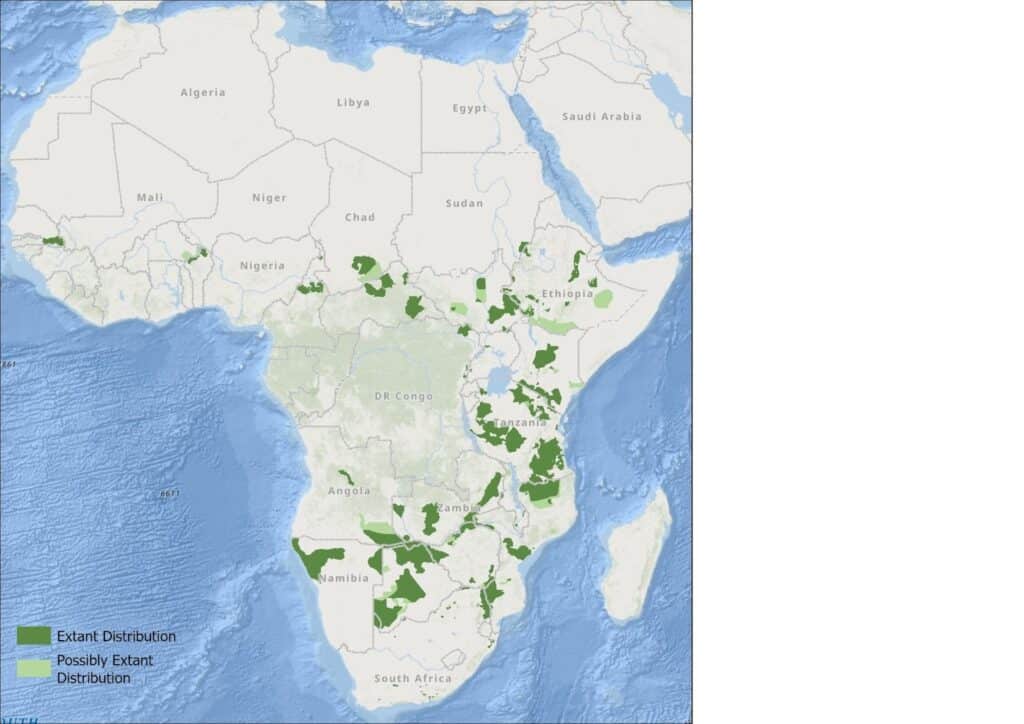
Africa’s lions are facing a complex and evolving set of challenges. Over the past 25 years, the continent’s lion population has declined by roughly half, leaving a maximum of 25,000 individuals remaining today, occupying just 6% of their historic range. Habitat loss, declining prey, and direct conflict with people have long shaped the conservation landscape for lions. Yet, despite these pressures there has been cautious optimism that, given the right support, lion populations could stablilize and recover in many parts of Africa.
Increasingly, however, a new and potentially far more dangerous threat is emerging. Targeted poaching of lions for their body parts is expanding in scale, geography, and in organisation. If left unchecked, this trade has the potential to undermine decades of conservation investment and, in some regions, push lion populations towards collapse. This blog is based on a paper recently published on this topic:
Grounds for Optimism
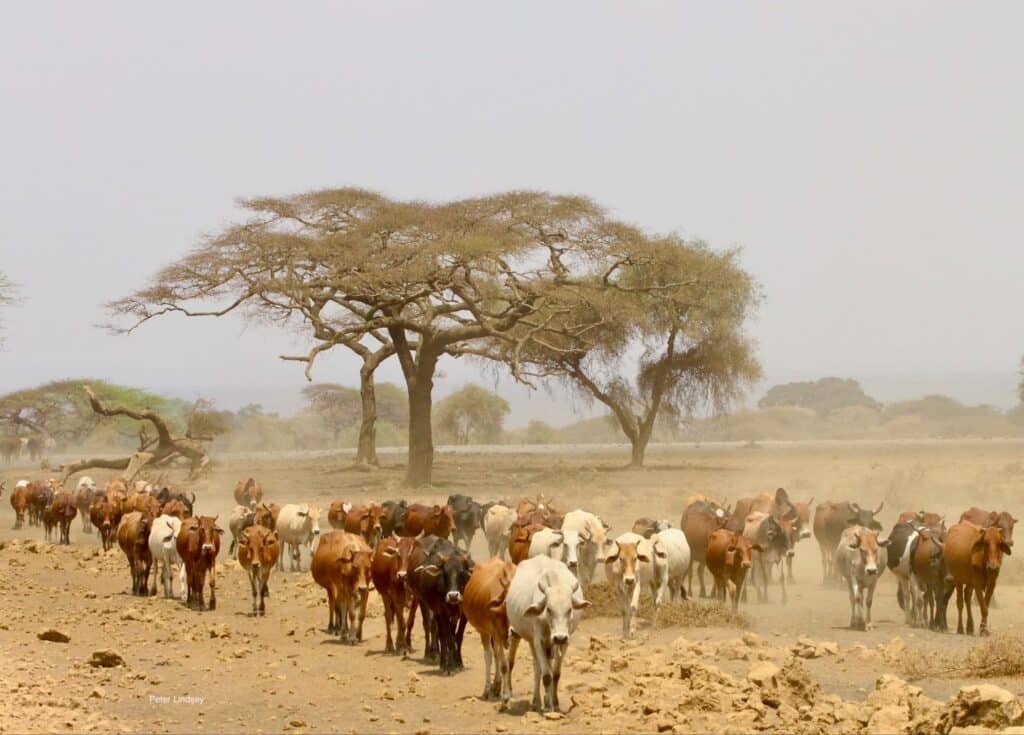
Lions are not an easy species to conserve. They require large landscapes, abundant prey, and tolerance from people who share space with them. Across Africa, lion populations have been affected by three broad categories of threats. First, habitat-related pressures such as agricultural expansion, mining, logging, infrastructure development, and encroachment into protected areas continue to shrink and fragment lion range. Second, declines in prey populations, driven largely by bushmeat hunting and competition with livestock, reduce the carrying capacity of many ecosystems. Third, direct lion mortality results from livestock conflict, snaring bycatch, cultural killings, and in some cases poorly managed or unregulated trophy hunting.
Despite these challenges, there has been reason for cautious optimism. Many African countries have set aside vast protected area estates, which—if adequately funded—could support three to four times more lions than they currently hold. Increasingly, remaining lion populations are concentrated in formal conservation areas, where protection is more feasible. The continent’s largest populations persist in strongholds such as the Serengeti–Mara ecosystem, the Kavango–Zambezi Transfrontier Conservation Area, and the Greater Limpopo Transfrontier Conservation Area.

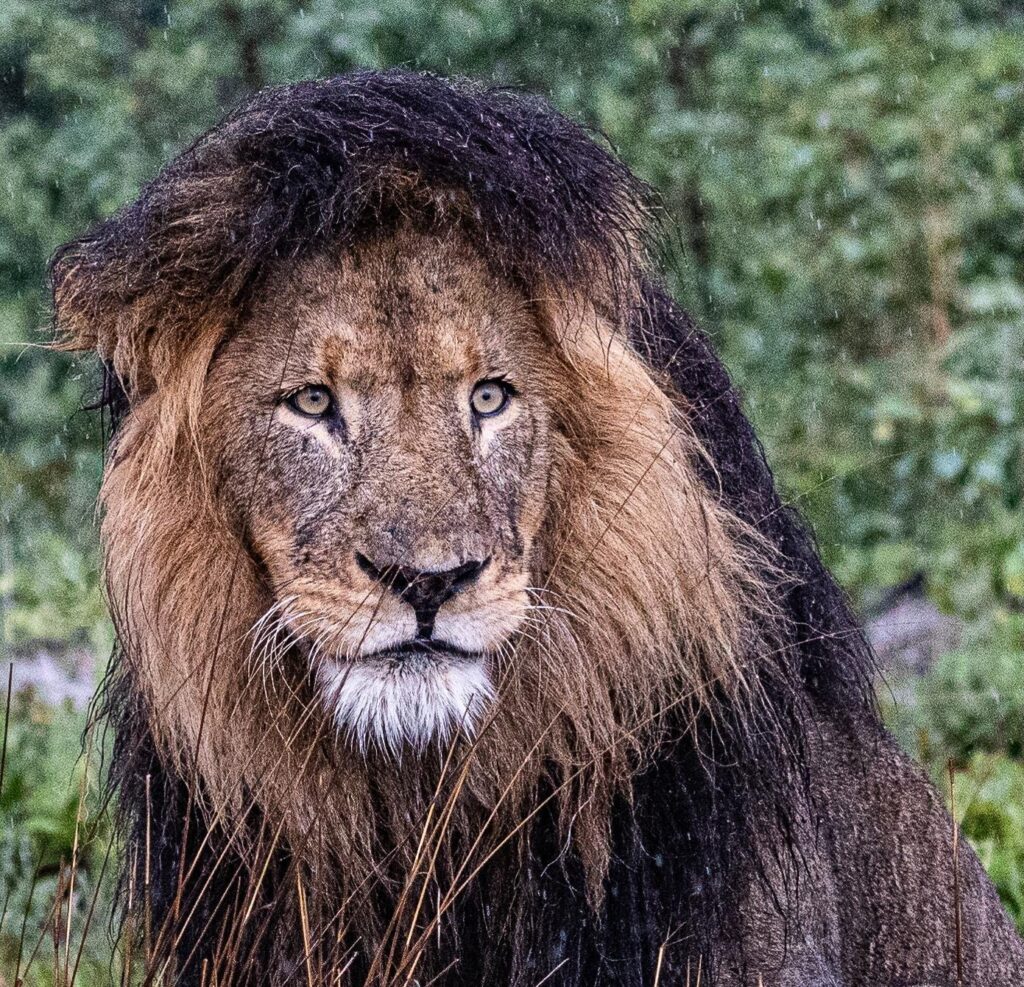
(Credit: Peter Lindsey)
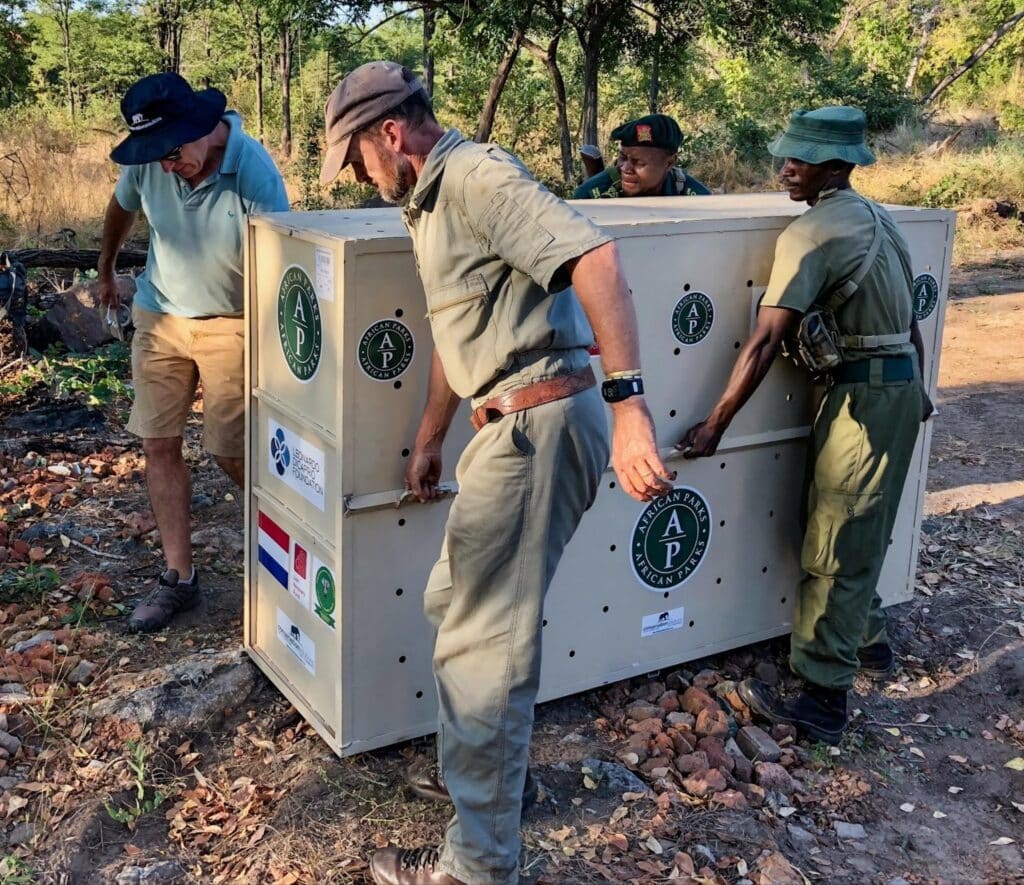
Importantly, conservation tools that work are now well established. Collaborative management partnerships between governments and conservation organisations have repeatedly demonstrated their ability to restore wildlife populations and improve protected area performance. In recent years, lions have been successfully reintroduced into several protected areas under such partnerships, including sites in Zambia, Malawi, Rwanda, and Mozambique.
At the same time, progress has been made in human–lion coexistence. A growing toolkit, ranging from lion guardians and improved livestock protection, to performance payments, land leases, and community conservancies, has reduced conflict and created incentives for people to coexist with wildlife. In many landscapes, community conservancies are now expanding, buffering, and reconnecting protected areas.

Against this backdrop, there has been a sense that if Africa could guide lion conservation through the next few decades then long-term persistence of the species is achievable.
A Threat That Could Change Everything
That optimistic trajectory is now under threat.
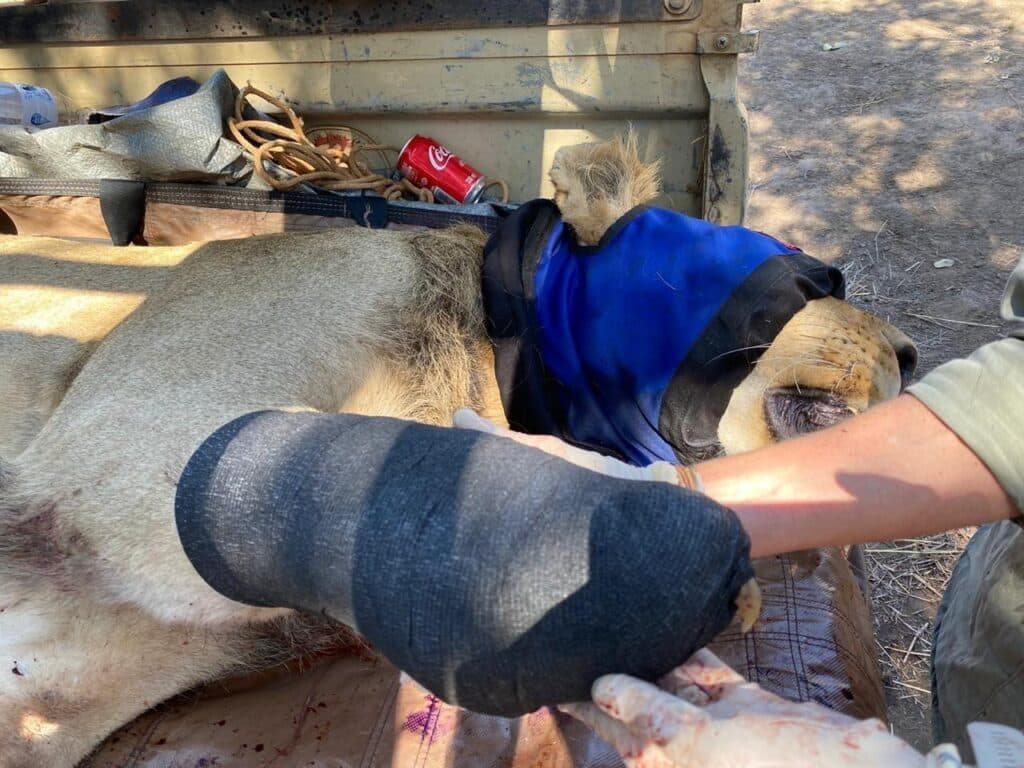
Over the past decade, there has been a marked increase in the targeted killing of lions for their body parts. While the use and trade of lion parts for cultural and spiritual purposes is not new, evidence increasingly suggests a shift in the nature of this trade. What was once largely opportunistic, localised, and small-scale is, in some cases, becoming commercial, organised, and transnational.
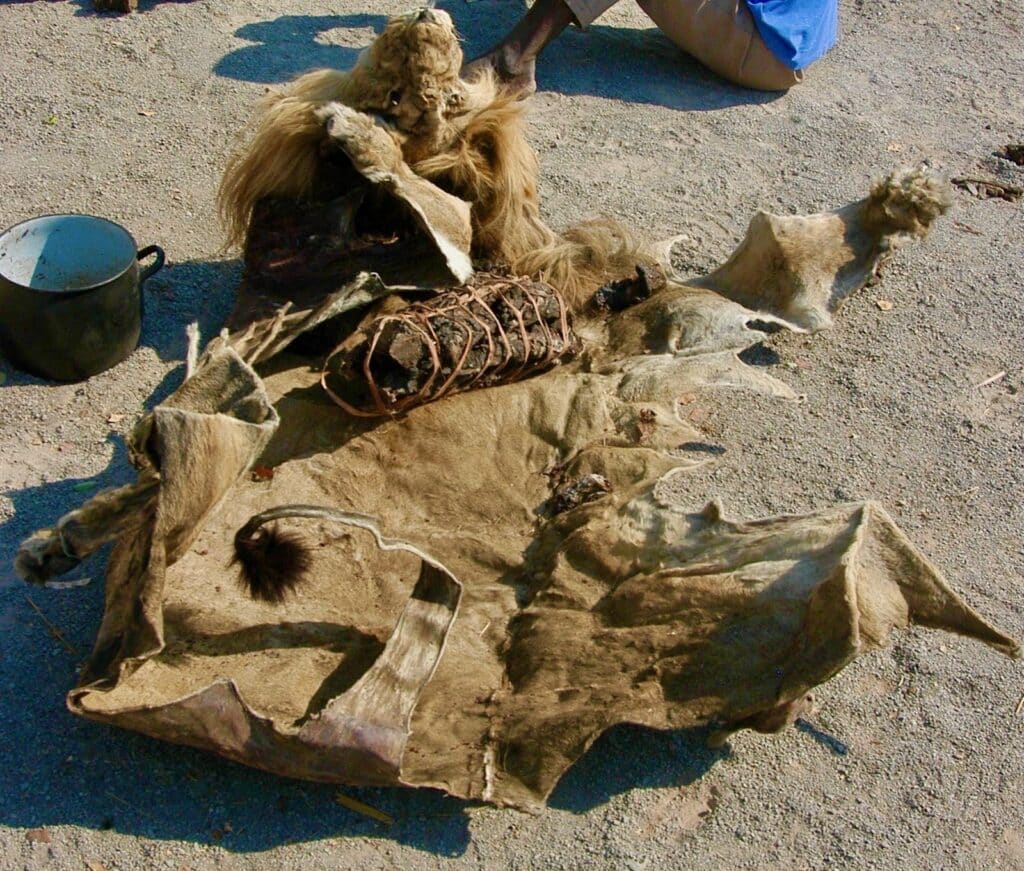
Lion body parts (skins, bones, teeth, claws, fat, and oils) have long held symbolic meaning in many African societies. They are associated with strength, power, protection, and authority, and have been used in ceremonies, rituals, and traditional belief systems for generations. Historically, much of this use relied on lions killed in retaliation for conflict or from natural mortality, rather than targeted hunting.
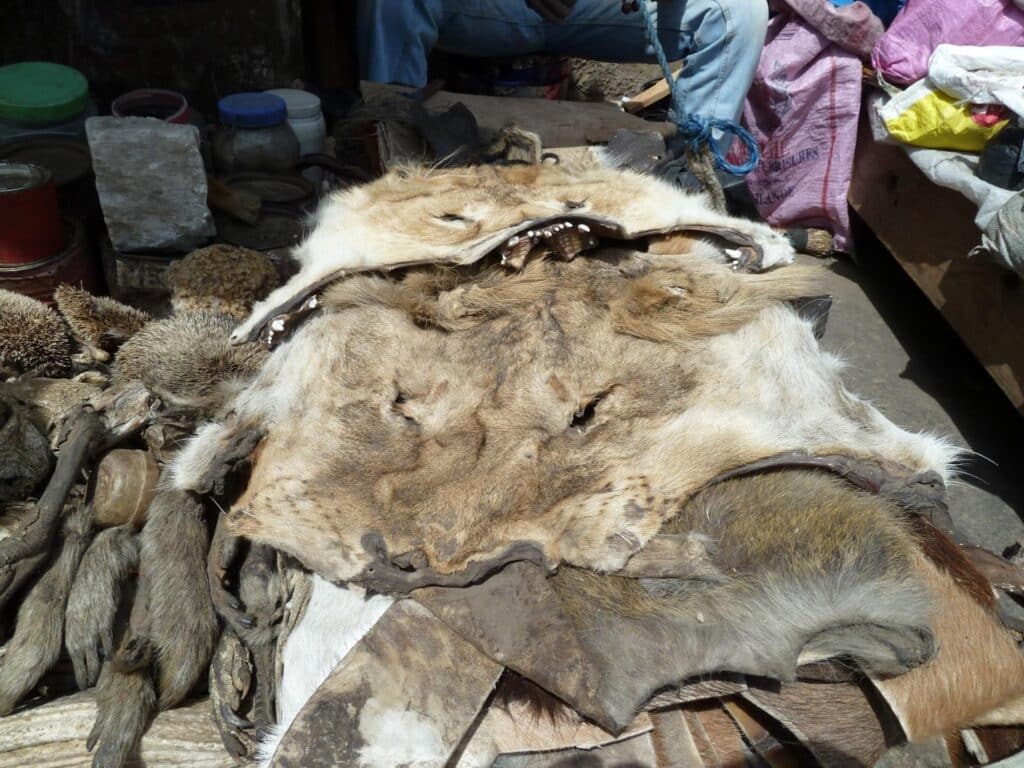
Today, however, there is growing evidence that lions are increasingly being killed deliberately to supply markets, both within Africa and beyond. Seizures, cross-border trafficking cases, and forensic investigations now point to organised supply chains that resemble those used in the trafficking of rhino horn, elephant ivory, and pangolin scales. This represents not just a quantitative increase in trade, but a qualitative change in risk.

Why Lions Are Especially Vulnerable
Lions are particularly susceptible to targeted poaching because of their biology and behaviour. As social animals that hunt and feed communally, they are highly vulnerable to poisoning. A single poisoned carcass can kill an entire pride in one event, making poisoning one of the most devastating and efficient methods used by poachers.
Recent incidents reveal disturbing levels of planning. In several cases, giraffes have been deliberately killed and used as bait to attract lions, indicating coordination and forethought characteristic of organised networks rather than opportunistic actors. Poisoning allows perpetrators to kill multiple lions while minimising personal risk, especially in remote areas with limited surveillance.
The impacts extend well beyond lions. Poisoned baits indiscriminately kill scavengers and other non-target species, with severe ecological knock-on effects. In one incident in Botswana, a single poisoning event killed four lions, along with dozens of vultures, a jackal, and a steppe eagle. Such events compound biodiversity loss and undermine ecosystem function.
A Complex and Persistent Demand
The demand for lion body parts is diverse, dynamic, and difficult to address. It is shaped by overlapping cultural, spiritual, and commercial motivations, and spans multiple geographies. Demand is not limited to one body part, one belief system, or one region.
Within Africa, culturally motivated use of lion parts has been documented in at least 37 countries. In southern and eastern Africa, lion parts are linked to spiritual practices and traditional healing. In parts of West Africa, long-standing beliefs have merged with urban commercialisation, giving rise to increasingly market-driven trade.
In Senegal, for example, surveys indicate that lion and leopard products are widely sold in markets across the country, despite the national lion population numbering only a few dozen individuals. Estimates suggest that dozens—possibly more than a hundred—lions may be required annually to meet domestic demand alone. Genetic evidence indicates that some of these products originate from neighbouring countries, highlighting the regional nature of the trade. Even in countries where lions have been extinct for decades, lion parts continue to appear in markets, underscoring the resilience of demand.
Beyond Africa, Southeast Asia represents an additional demand centre. There, lion parts have been used as substitutes for tiger products in traditional medicinal and cultural practices, particularly following restrictions on tiger trade. Evidence has emerged of lion bones, teeth, and claws moving from Africa into Asian markets, facilitated by growing trade links and diaspora networks. While the relative influence of African versus Asian demand remains unclear, the interaction between these markets adds another layer of complexity.

Trade Networks Are Becoming More Organised
Alongside expanding demand, there are growing indications that trade and supply chains are becoming more organised. Large seizures, such as shipments of lion skulls or hundreds of kilograms of body parts intercepted en route across borders, point to coordination, logistics, and financial investment consistent with organised crime.
While some of this trade may involve parts from captive-bred lions, particularly from South Africa’s former legal skeleton export industry, the relationship between legal supply and illegal poaching remains contested. Some argue that legal trade created pathways and connections that persist today; others suggest that restrictions on legal supply may have increased incentives to source parts from the wild. What is clear is that wild lion populations are now being directly affected.
A Widening Geographic Footprint
Perhaps most concerning is the geographic spread of targeted lion poaching. Mozambique has long been a hotspot, but the threat is now spilling into neighbouring countries and adjacent protected areas. In northern Kruger National Park, lion numbers have declined dramatically over the past two decades, with evidence pointing to a combination of targeted poaching and snaring bycatch.
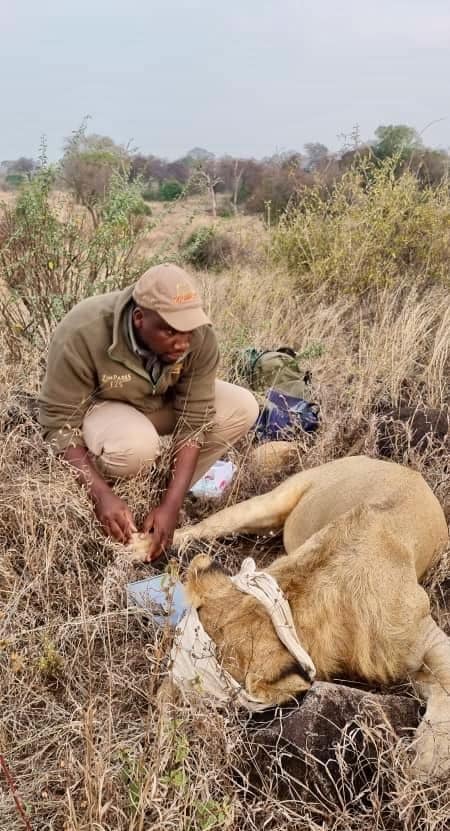
In Gonarezhou National Park in Zimbabwe, unexpectedly low lion numbers prompted the introduction of intensive monitoring and rapid-response measures, which seem to be working. This experience underscores a critical lesson: even well-managed, well-resourced protected areas are vulnerable without targeted species monitoring.
Elsewhere in southern Africa, transnational poaching syndicates that once focused on elephants and rhinos are now increasingly targeting lions, often in the same landscapes. This diversification mirrors patterns seen in other illegal wildlife trades and suggests a troubling adaptability among criminal networks.
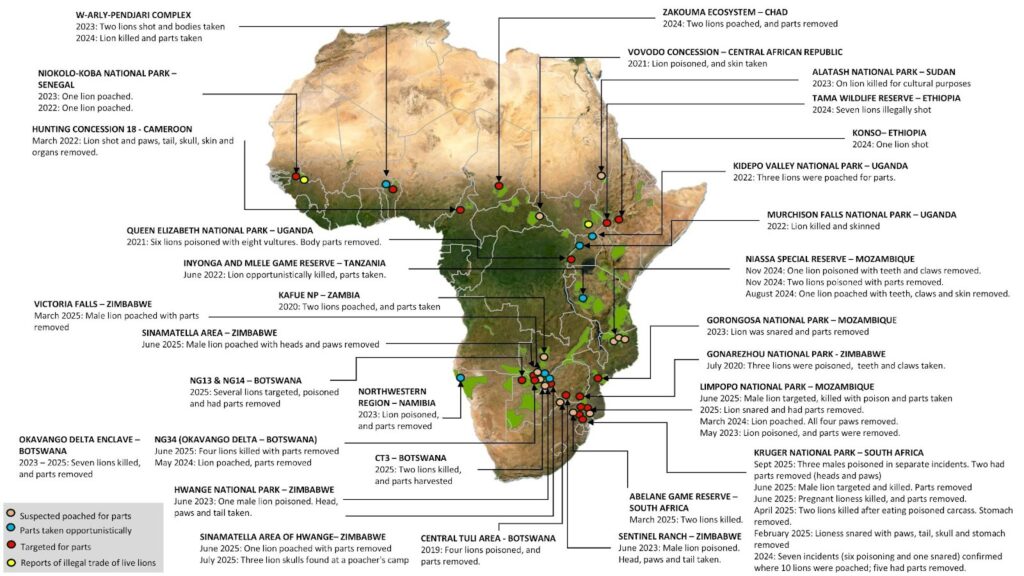
Recent (January 2019 to September 2025) lion mortalities across Africa involving the removal of body parts. This is not an exhaustive list of incidents that have occurred but is a summary of the incidents contributed to this study to illustrate the severity and geographic scope of the threat to the species. Taken from: Lindsey P, Nicholson SK, Coals PG, Taylor WA, Becker MS, Rademeyer K, Briers‐Louw WD, Almeida J, Chase M, Dore A, Henschel P. Increasing Targeted Poaching of Lions for Trade Has the Potential to Pose an Existential Threat to the Species in Africa. Conservation Letters. 2026 Jan;19(1):e70014.Available at: https://conbio.onlinelibrary.wiley.com/doi/pdf/10.1111/con4.70014
Preventing Entrenchment: Acting Before It’s Too Late
The lion body part trade shows many of the early warning signs seen previously in the crises facing elephants, rhinos, and pangolins. In those cases, delayed responses allowed markets to entrench, populations to crash, and criminal networks to become increasingly sophisticated.
A precautionary approach is therefore essential. This does not mean acting on speculation, but responding decisively to credible signals of emerging risk—even where data remain incomplete. Acting early is almost always more effective, and far less costly, than attempting recovery after collapse.
Key priorities include:
- Strengthening protection and monitoring in lion strongholds and emerging hotspots
- Working closely with communities to reduce conflict and build long-term support for conservation
- Improving understanding of trade dynamics through targeted research and forensic tools
- Disrupting trafficking networks using intelligence-led enforcement
- Strengthening legal frameworks and prosecutions
- Reducing demand through culturally sensitive, evidence-based interventions
The Role of the Lion Recovery Fund
The Lion Recovery Fund is already supporting efforts across this spectrum. These include funding DNA databases to trace confiscated samples, backing research into trade dynamics, supporting national and regional anti-trafficking initiatives, and strengthening on-the-ground protection in key landscapes.
Yet much work remains.
Lion conservation stands at a crossroads. If we act decisively, before illegal trade becomes fully entrenched, there is every reason to believe that lions can persist and recover across much of their range. If we fail to act, targeted poaching could become an existential threat in parts of Africa.
The window for prevention is still open. The time to act is now.